


Hardness testing using the UCI method (Ultrasonic Contact Impedance) this a modern, non-destructive method of measuring the hardness of metal materials, which uses ultrasonic vibrations of a diamond probe tip. The UCI method enables quick and precise hardness measurement without the need to cut out samples or destroy the tested element.
It is especially useful in control welds, heat-affected zones (HAZ), heat-treated elements and finished structures, also directly on the facility.
Where and when is the UCI hardness test performed?
UCI tests are used wherever required local, fast and repeatable hardness measurement:
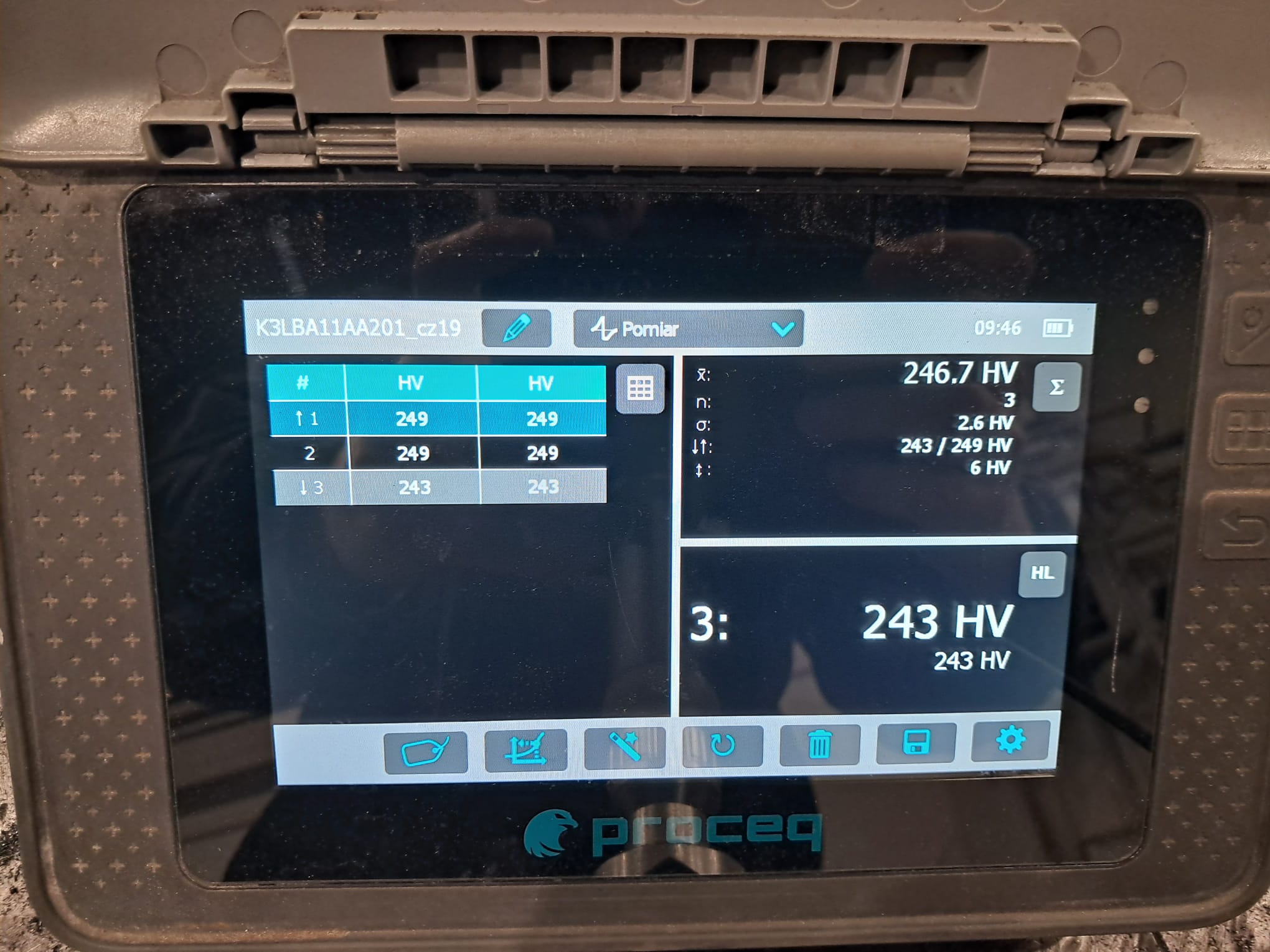
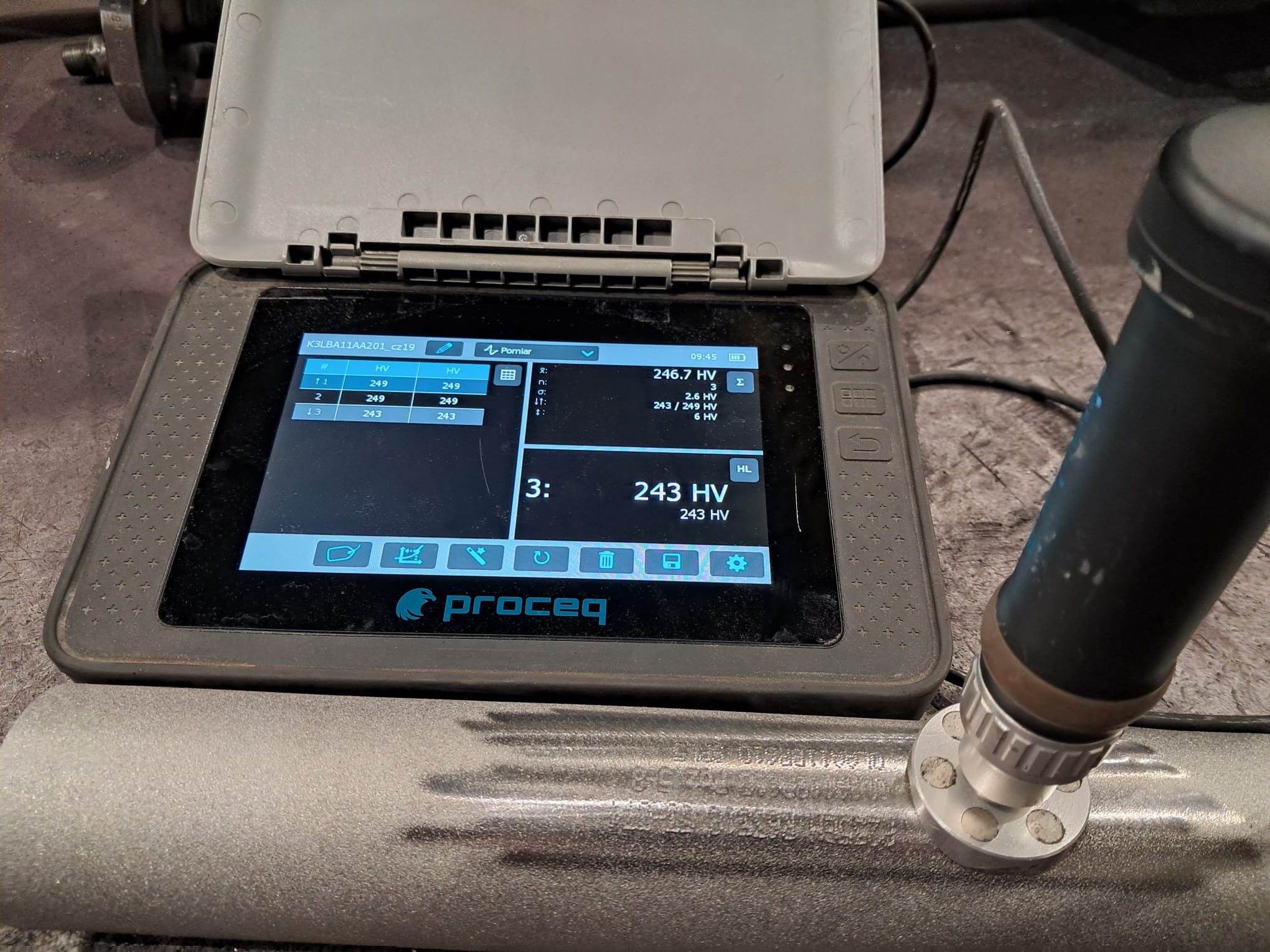
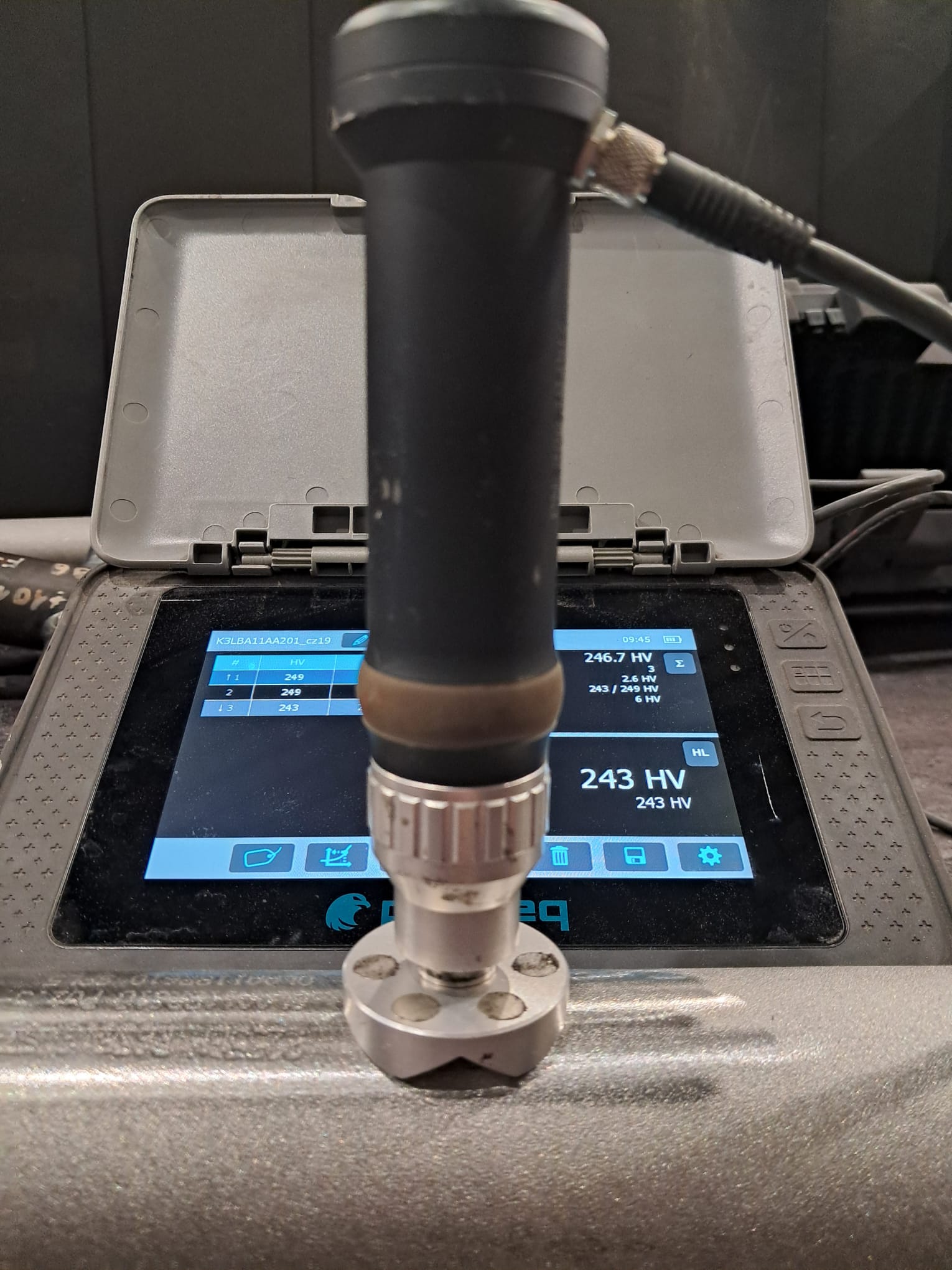

hardness control welds and HAZ,
verification of the effectiveness of heat treatment (hardening, tempering, normalizing),
technical acceptance of machine and structure elements,
operational and diagnostic tests,
measurements in hard-to-reach places or on large elements,
material control in the energy, petrochemical and machinery industries.
The UCI method works perfectly where classic laboratory methods (Brinell, Rockwell, Vickers) are impossible to use.
What is the UCI method?
The UCI probe is equipped with Vickers diamond indenter, which vibrates at an ultrasonic frequency. When the probe is pressed against the surface of the material being tested:
the indenter penetrates the material with a certain force,
the probe vibration frequency changes,
this change is proportional to the hardness of the material.
Based on this change, the device calculates and displays the hardness value.
The UCI hardness test procedure
The PT process consists of several precisely defined stages:
- Surface preparation
The surface should be clean, smooth and free of scale or paint (light sanding is sufficient). - Probe and load selection
Depending on the hardness range and geometry of the element. - Device calibration
Calibration on hardness standards compatible with the tested material. - Taking the measurement
Pressing the probe against the surface – the result appears almost immediately. - Registration and documentation of results
Possibility to record measurements and prepare a test report.
What hardness scales can be measured using the UCI method?
The UCI method directly measures HV (Vickers), and the results can be converted to:
HB (Brinell)
HRC / HRB (Rockwell)
MPa (tensile strength – approximate)
Advantages of the UCI method
non-destructive nature of the test,
very small measurement print,
quick measurement (a few seconds),
the ability to test thin elements and narrow zones (e.g. HAZ),
mobility – field research,
high repeatability of results.
Limitations of the UCI method
requires a homogeneous material structure,
lower accuracy on very rough surfaces,
the need for correct calibration for a given material.
Standards for UCI hardness testing
UCI hardness tests are performed in accordance with the following standards:
PN-EN ISO 16859-1 – metal hardness testing using the UCI method
PN-EN ISO 16859-2 – verification and calibration of UCI devices
PN-EN ISO 6507 – Vickers hardness (reference)
PN-EN ISO 9712 – qualification of non-destructive testing personnel (if UCI is used as an NDT method)