


Constructing and modernizing pipelines in the chemical industry requires specialized knowledge and experience. Chemar Rurociągi Sp. z o.o. specializes in this type of installation, offering comprehensive services from design and material selection to prefabrication, testing, delivery, and assembly (spooling).
Most commonly used due to high corrosion resistance and durability in a wide range of temperatures and pressures Chemical Industry They are made of stainless and acid-resistant steel. This is crucial when transporting aggressive chemicals such as sulfuric acid, nitric acid, or hydrochloric acid. Thanks to their properties, these pipelines guarantee the safe flow of aggressive substances, minimizing the risk of damage, leaks, or equipment failure.
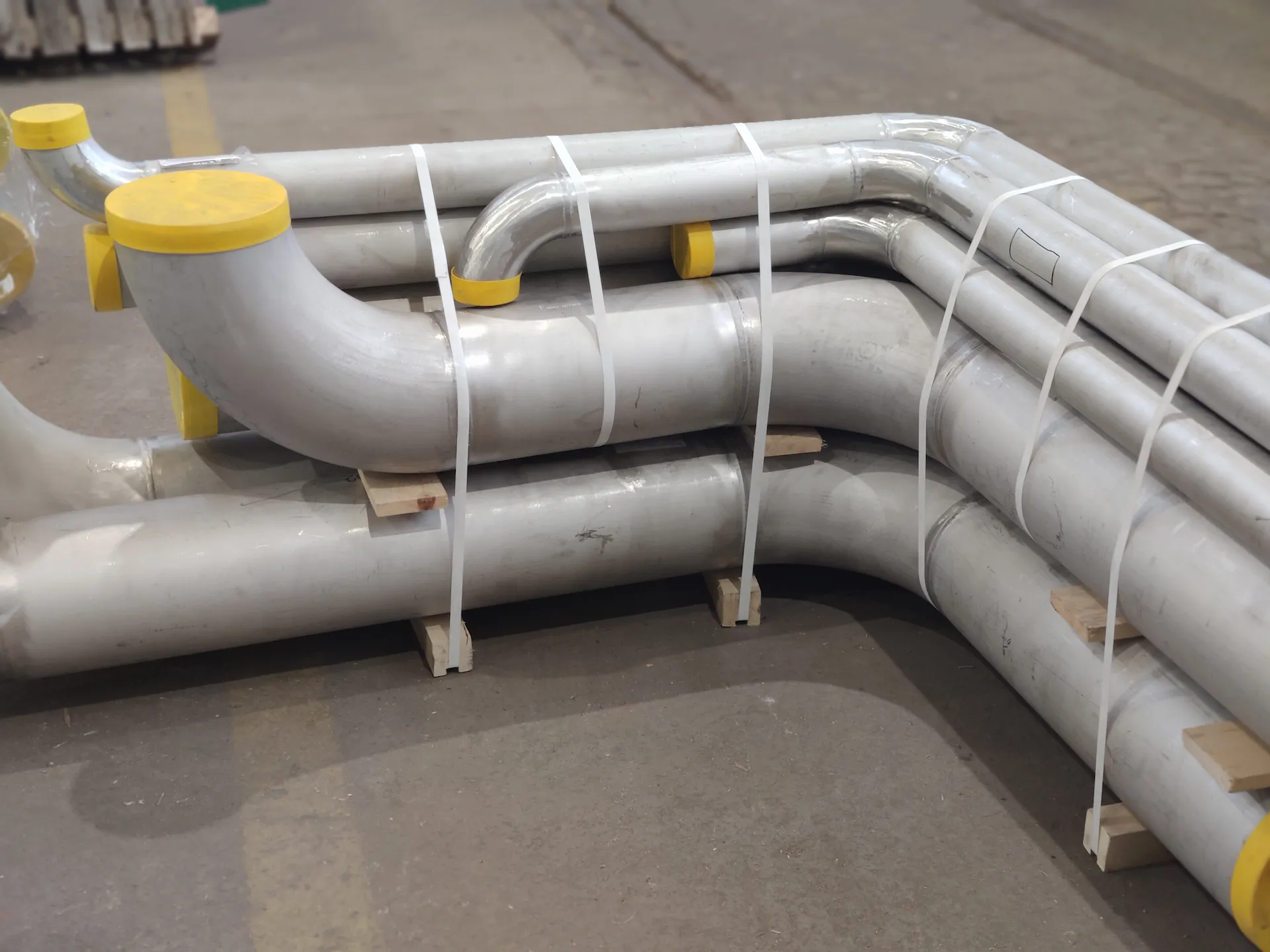
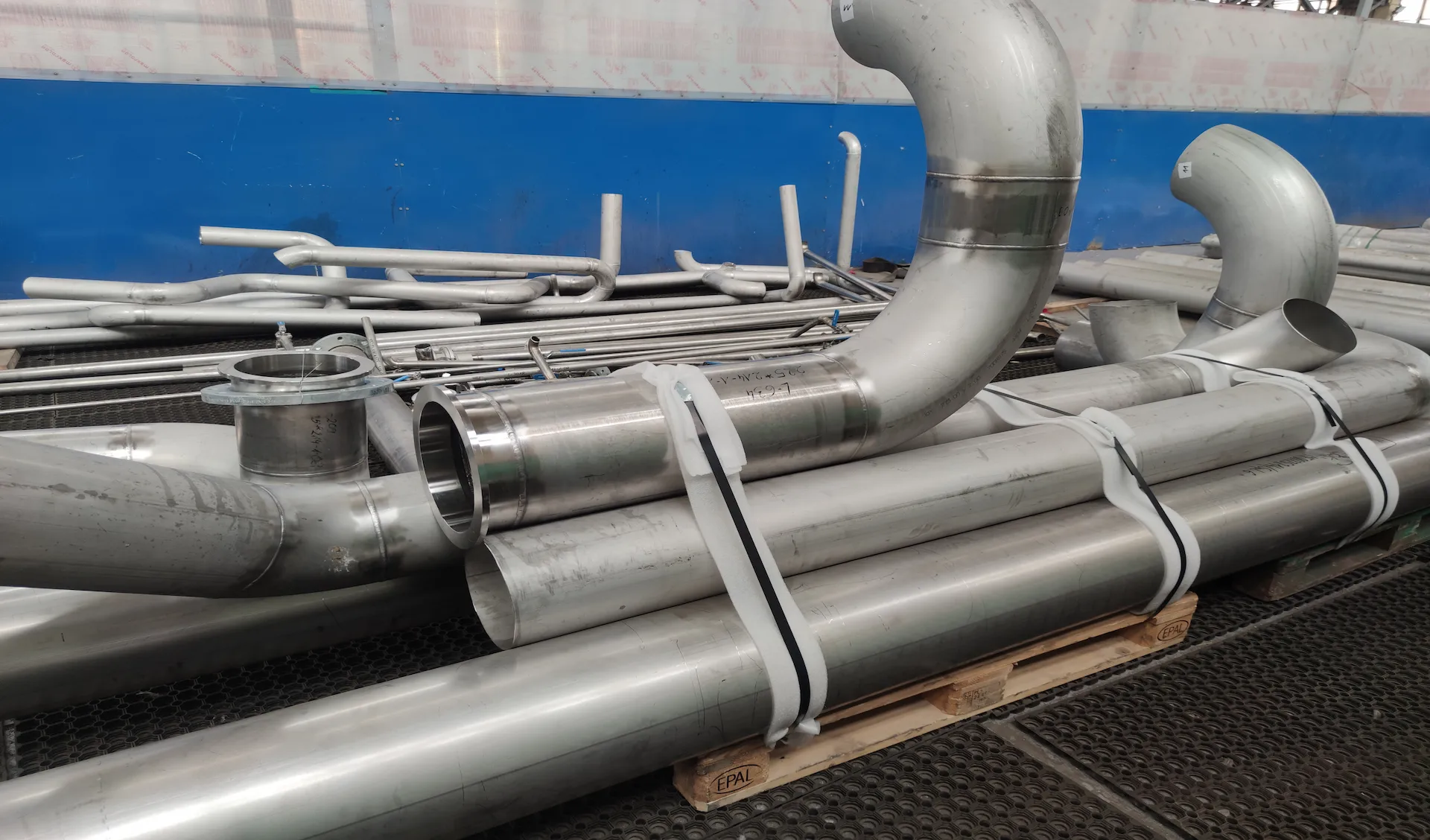
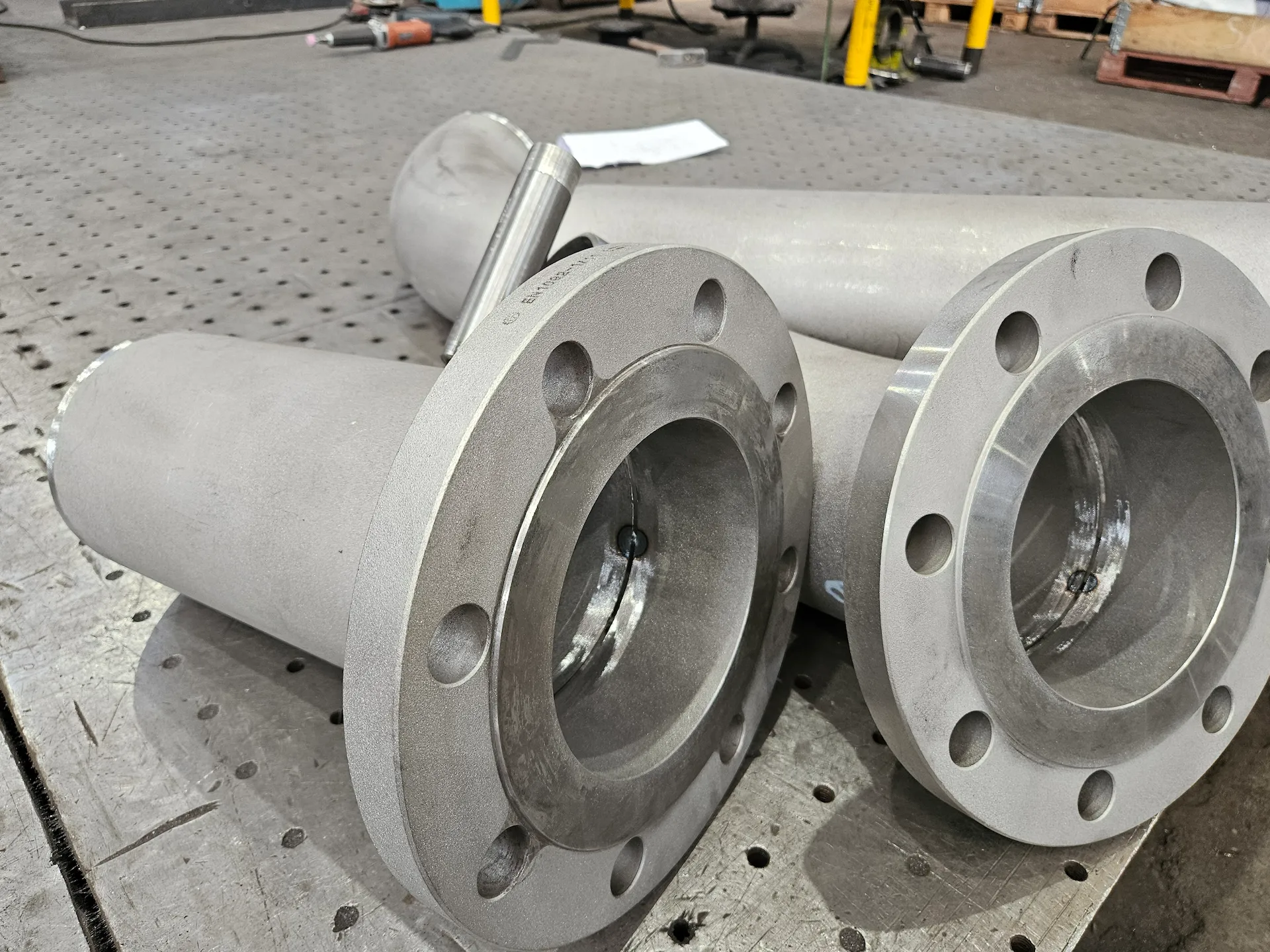
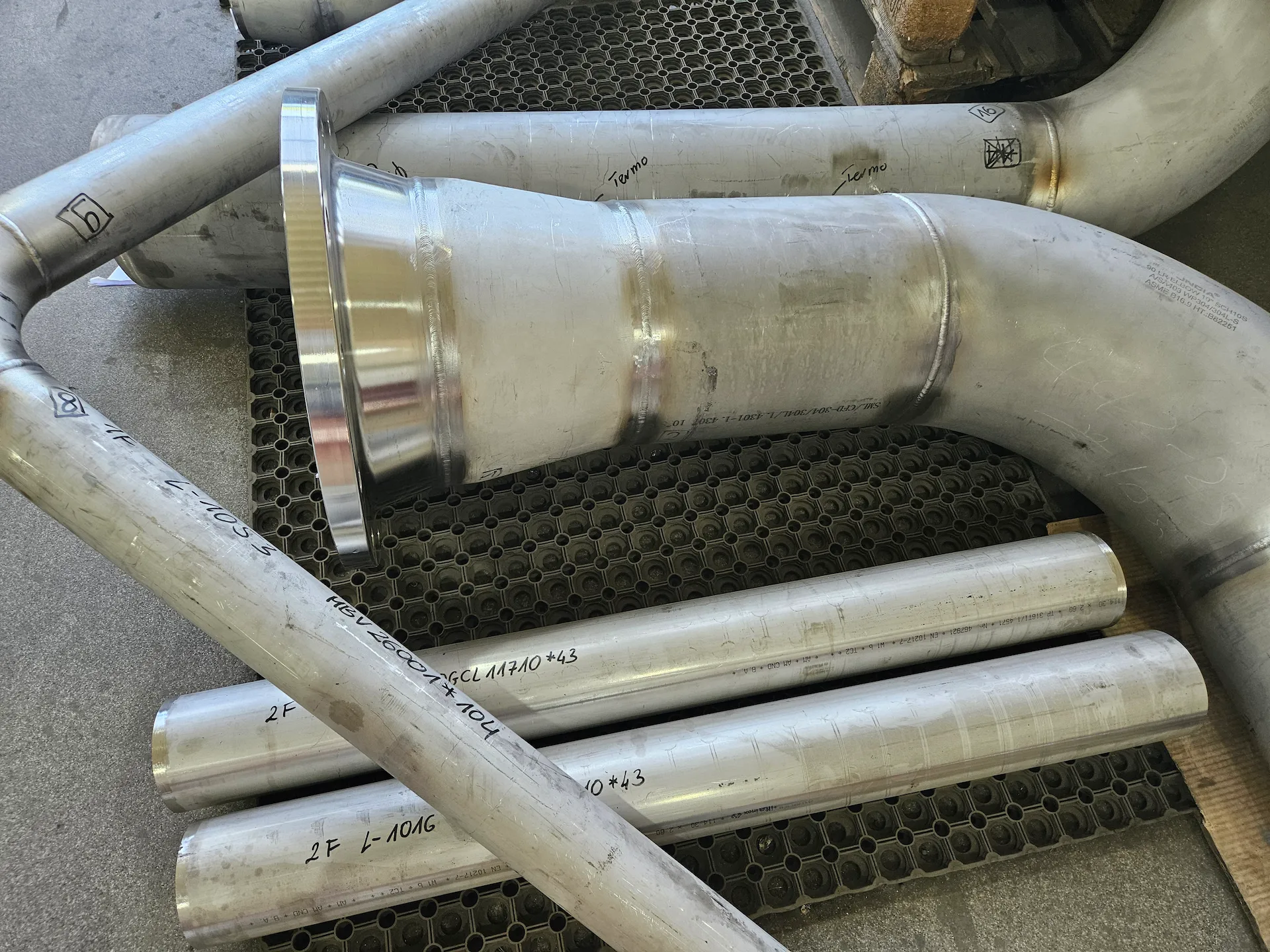
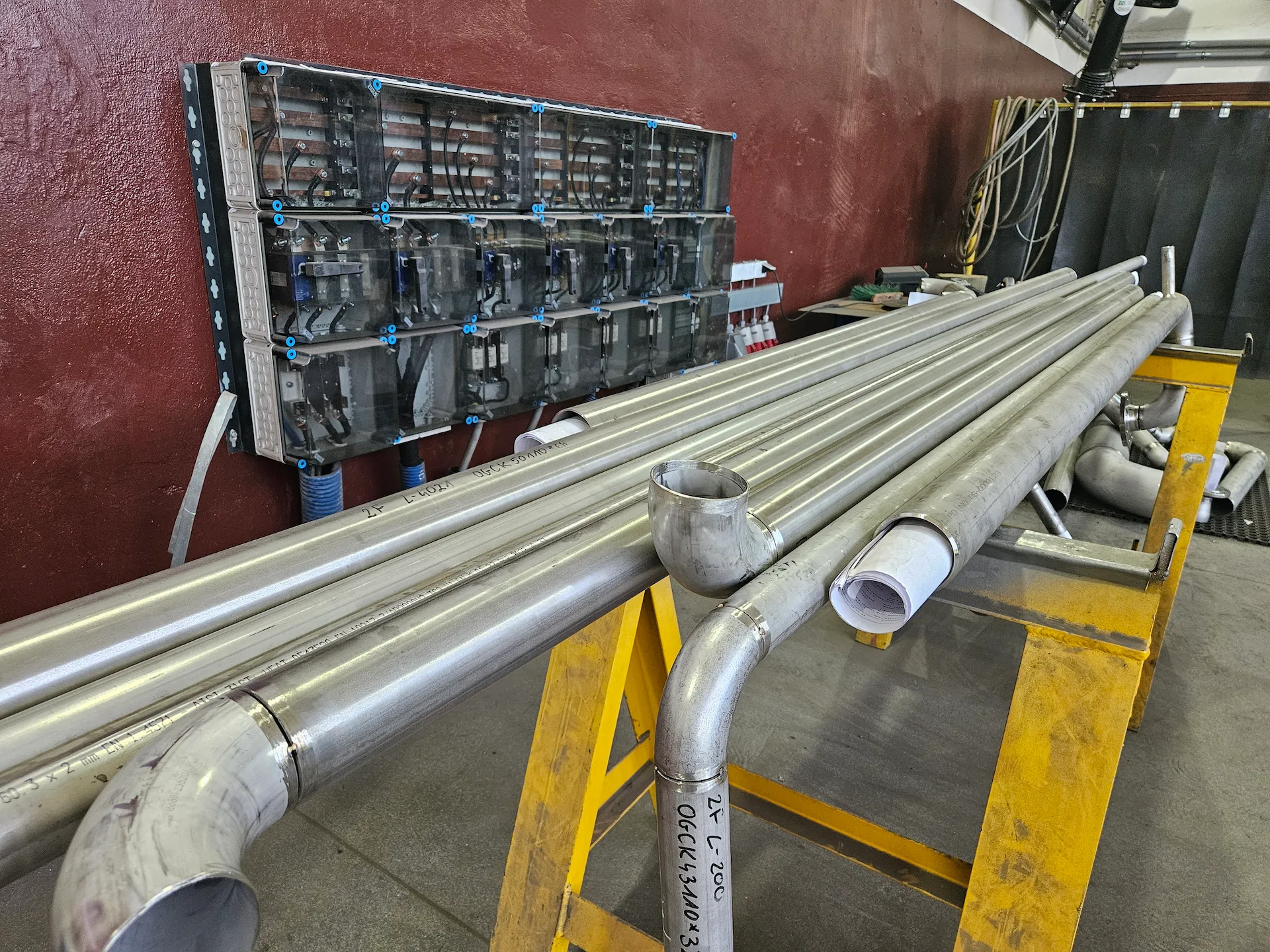
Chemar Rurociągi Sp. z o.o. in its production it most often uses stainless and acid-resistant steels from group 8 and DUPLEX i SUPERDUPLEX from group 10 (classification according to the PN-CR ISO 15608:2000 standard).
The manufactured pipeline elements, depending on the purpose and operating conditions, can be made of various grades of stainless steel, including austenitic grades: 1.4301 (X5CrNi18-10), 1.4307 (X2CRNI18-9), 1.4401 (X5CrNiMo17-12-2), 1.4404 (X2CrNiMo17-12-2), 1.4529 (X1NiCrMoCuN25-20-7), 1.4535 (X2CrNiMo17-12-3), 1.4536, 1.4539 (X1NiCrMoCu25-20-5), 1.4547 (X1CrNiMoCuN20-18-7), ferritic: 1.4000 (X6Cr13), 14016 (X6Cr17) and ferritic-austenitic duplex type 1.4462 (X2CrNiMoN22-5-3) and superduplex (X2CrNiMoN25-7-4). The above-mentioned species are characterized by varying corrosion resistance, especially in humid environments containing chlorides.
Pipeline components manufactured by Chemar Rurociągi Sp. z o.o. meet the requirements of the standards PN-EN 13480, PN-EN 12952, Directives 2014/68/EU and other technical specifications and technical conditions of execution and acceptance developed individually and agreed with the Client.
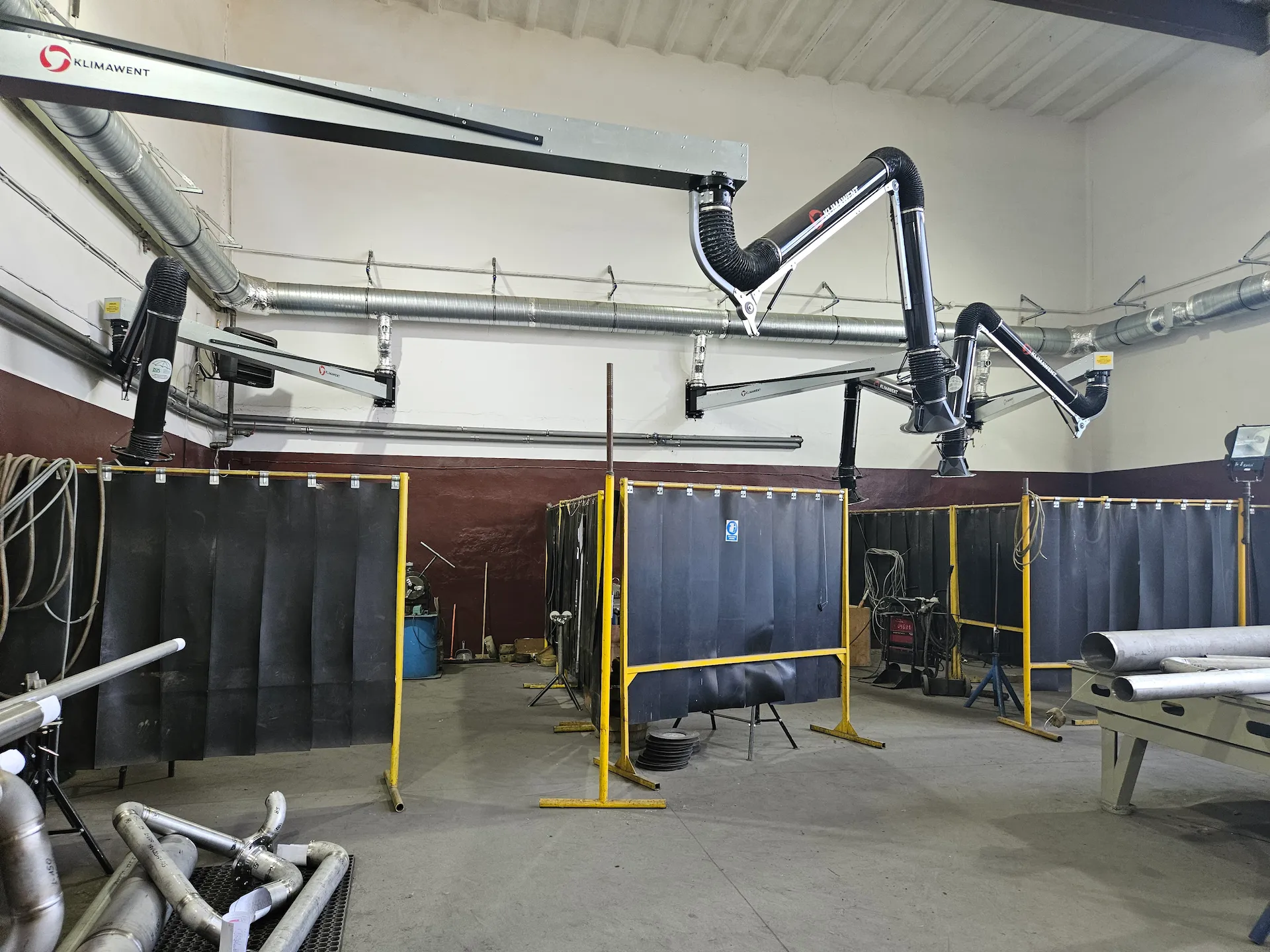
Chemar Rurociągi Sp. z o.o. has a separate workshop dedicated to the production of stainless steel pipeline components. This protects the stainless steel from direct contact with special tooling components made from other steels, such as carbon or alloy steels. For stainless steel processing, we use tools designed exclusively for stainless steel processing. The tools are appropriately marked.