


Phased Array Ultrasonic Testing (PAUT) is an advanced non-destructive testing method designed for quality control of welded joints. It utilizes multi-element ultrasonic probes and electronic wave beam control, enabling highly accurate detection and imaging of imperfections.
The PAUT method ensures a high level of accuracy, repeatability and safety, which is why it is widely used.
Where and when are PAUT weld tests performed?
PAUT tests are used at various stages of the implementation of welded structures:

final inspection of butt and fillet welds,
inter-operational controls,
tests after welding repairs,
periodic operational inspections.
The method is used in the energy, petrochemical, offshore, steel construction and machinery industries, among others.
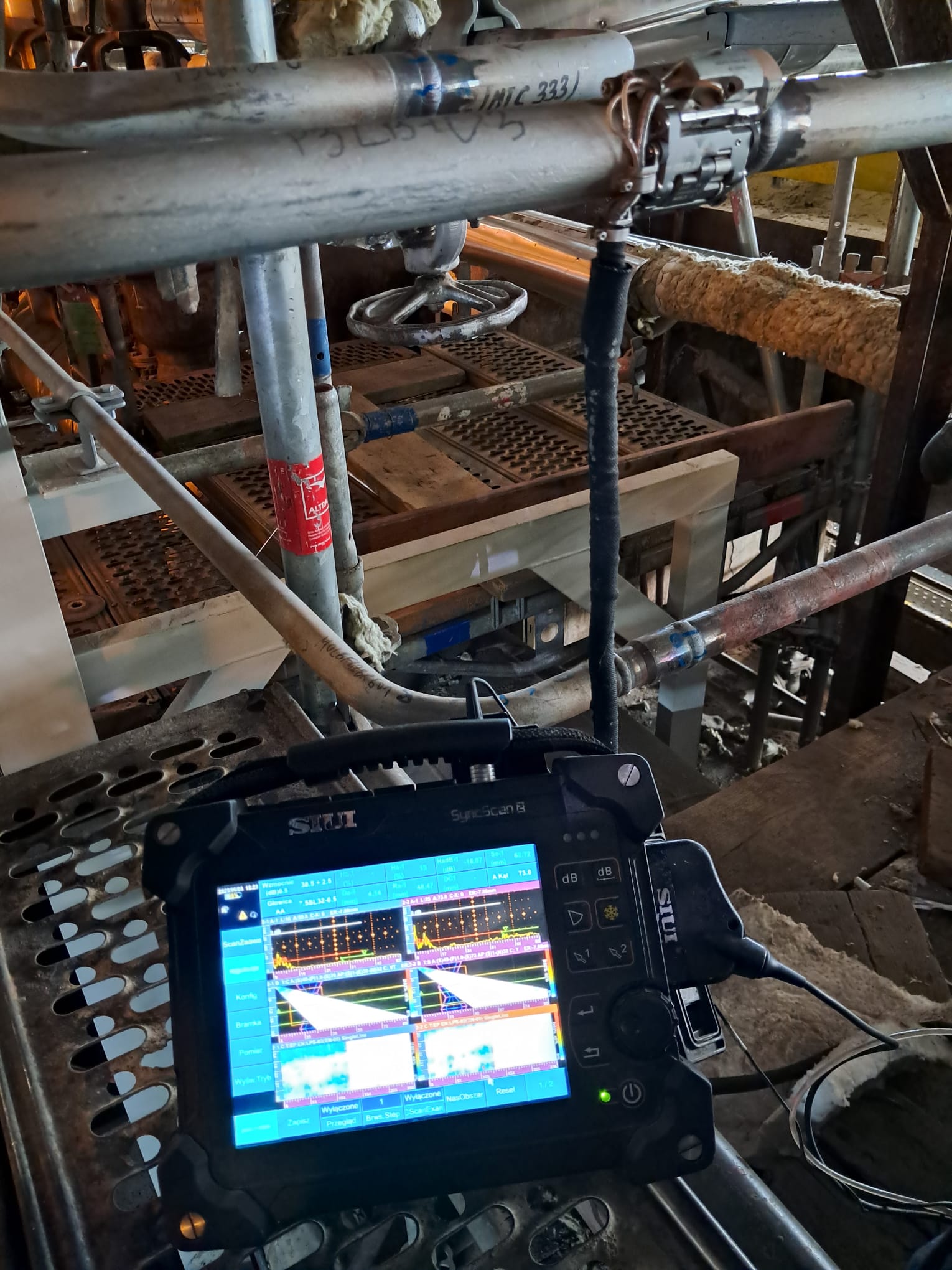
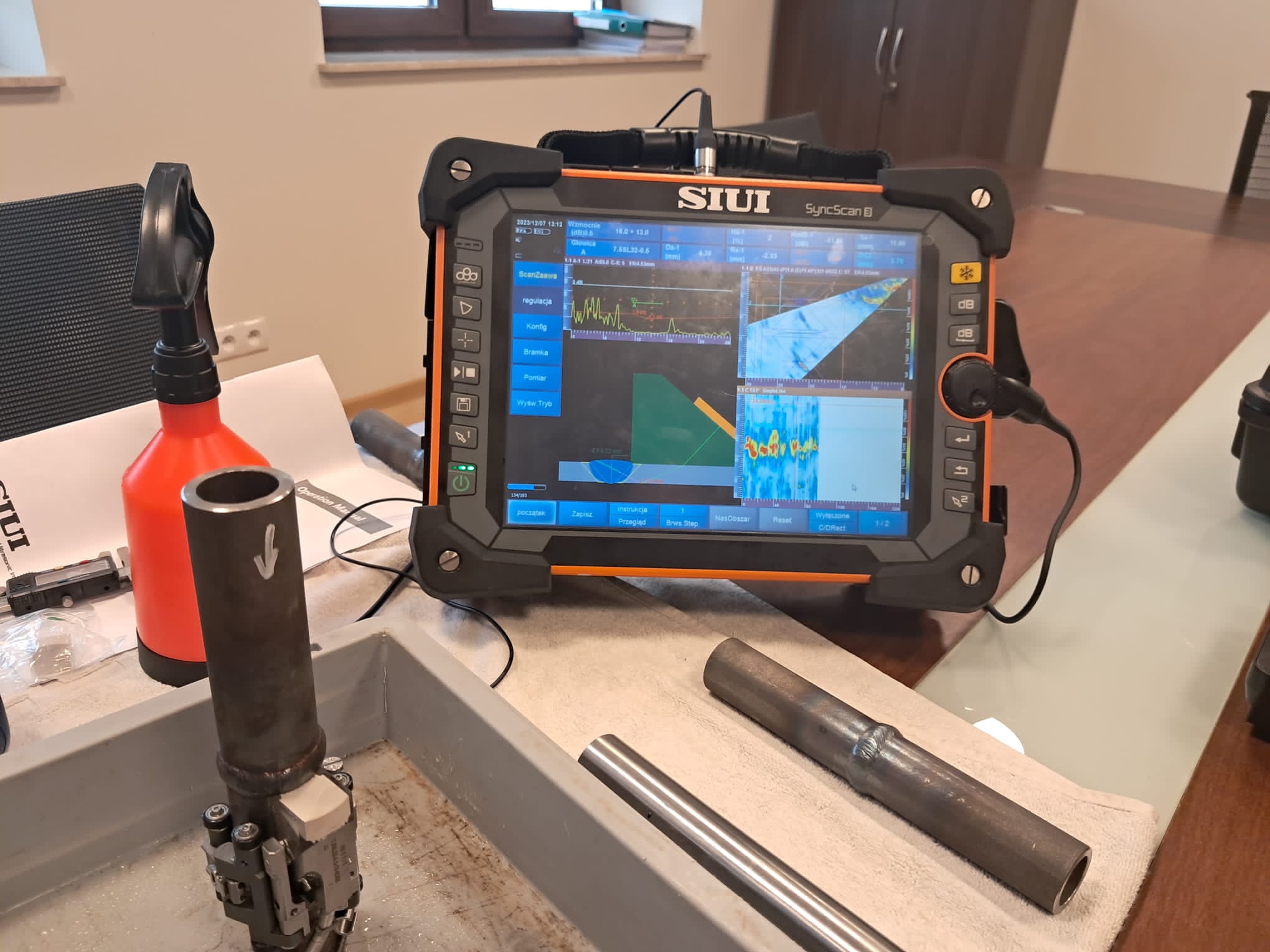
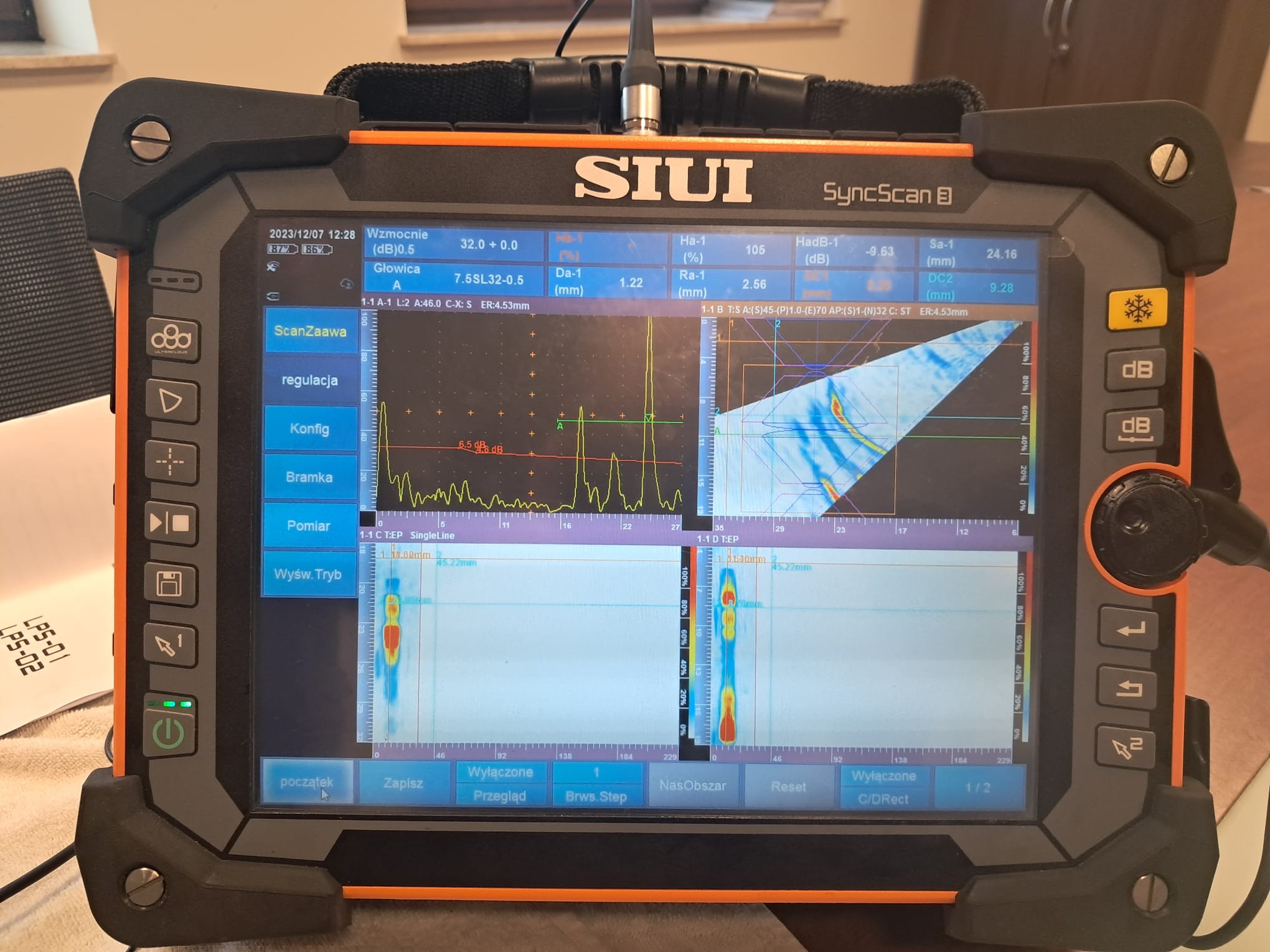
Types of PAUT results presentation
The following imaging methods are typically used in Phased Array weld studies:
A-scan
one-dimensional presentation of the amplitude-time signal,
enables the assessment of the depth and nature of the indication.
B-scan
longitudinal cross-section of the weld,
shows the location of discontinuities as a function of weld length and depth.
C-scan
plan view (top view),
enables mapping of the weld and assessment of the size and distribution of defects.
S-scan (sector scan)
simultaneous presentation of multiple angles in one image,
particularly useful when examining butt welds.
How is PAUT testing of welds performed?
- Analysis of technical documentation
Determination of joint geometry, material thickness and acceptance criteria. - PAUT system calibration
Calibration of ultrasonic equipment in accordance with the requirements of the standard. - Scanning a welded joint
Moving the head along the weld while simultaneously recording data. - Imaging and data analysis
Interpretation of A-scan, B-scan, C-scan and S-scan. - Assessment and reporting
Determining the location, size and nature of non-conformities and preparing a report.
What can PAUT weld testing detect?
The PAUT method enables the detection and assessment of, among others:
lack of melting,
gluing,
internal and surface cracks,
porosity and pore clusters,
volumetric discrepancies,
defects arising during operation.
PAUT allows accurately determine the location, size and orientation of discontinuities, which significantly exceeds the capabilities of classic UT.
Standards for PAUT testing of welds
Phased Array weld tests are carried out in accordance with applicable standards:
PN-EN ISO 13588:2019 - Non-destructive testing of welds - Ultrasonic testing - Use of automated mosaic head technique
PN-EN ISO 19285:2017 - Non-destructive testing of welds - Ultrasonic testing using the mosaic probe technique (PAUT) - Acceptance criteria
PN-EN ISO 18563-1:2023 Non-destructive testing – Characterization and verification of equipment for the ultrasonic phased array technique – Part 1: Equipment
PN-EN ISO 18563-2:2017-11 – English version Non-destructive testing – Characterization and verification of ultrasonic equipment with multi-transducer probes – Part 2: Probes
PN-EN ISO 18563-3:2016-02 – English version Non-destructive testing – Characterization and verification of ultrasonic equipment with multi-transducer heads – Part 3: Complete equipment
PN-EN ISO 20601:2019-03 – English version Non-destructive testing of welds – Ultrasonic testing – Application of automated mosaic head technique for thin-walled steel elements (from 3.2-8 mm)
PN-EN ISO 23243:2021-06 – English version Non-destructive testing – Ultrasonic testing using phased arrays – Terminology