


Municipal waste incineration plants (WtE – Waste to Energy) are complex industrial plants in which the process of thermal waste treatment allows for recovery of thermal and electrical energy.
Pipelines are a key element of technological systems, enabling transport of working media, including:
Water vapor
Condensate
Feed water
Air
Cooling water
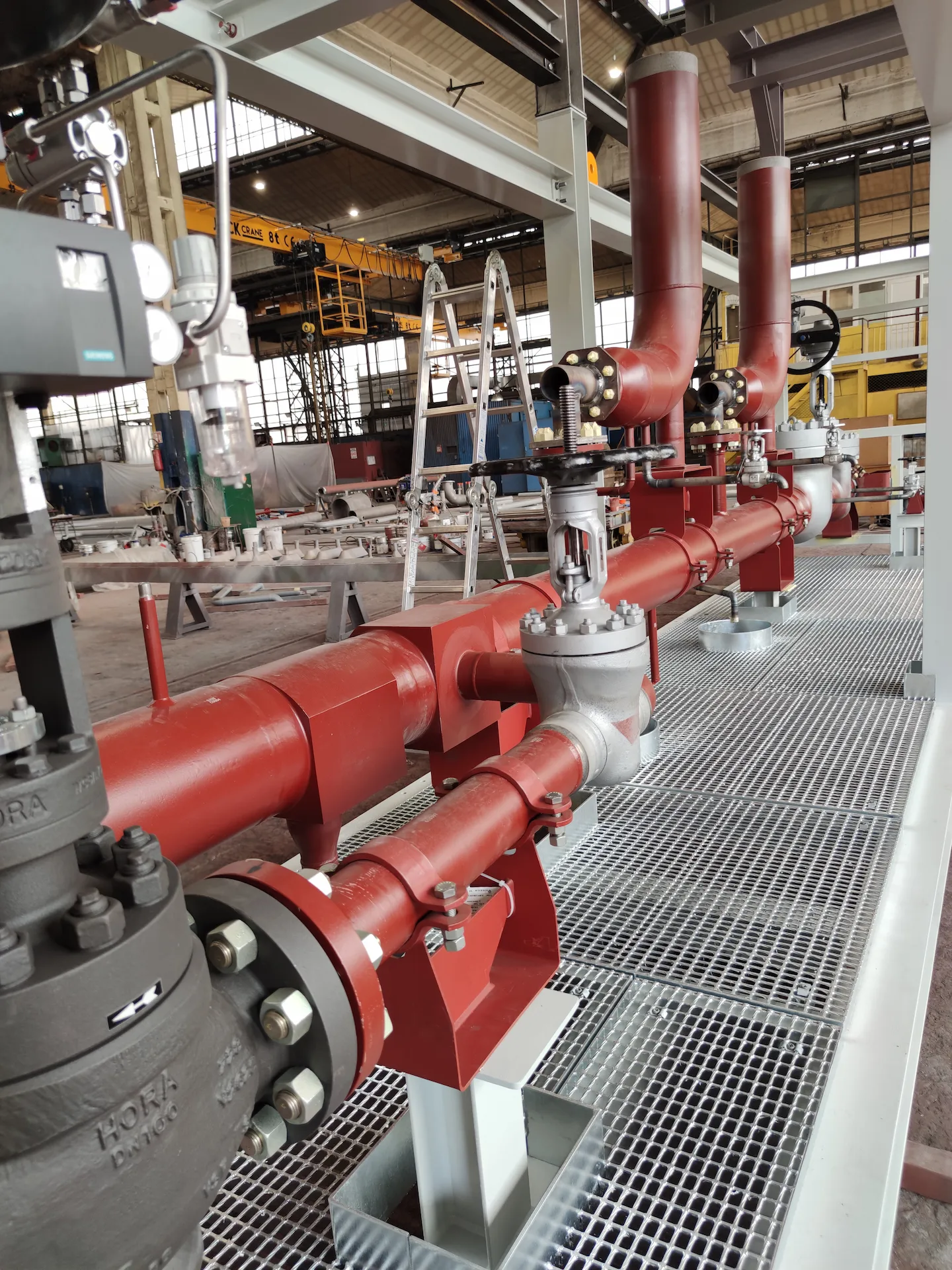
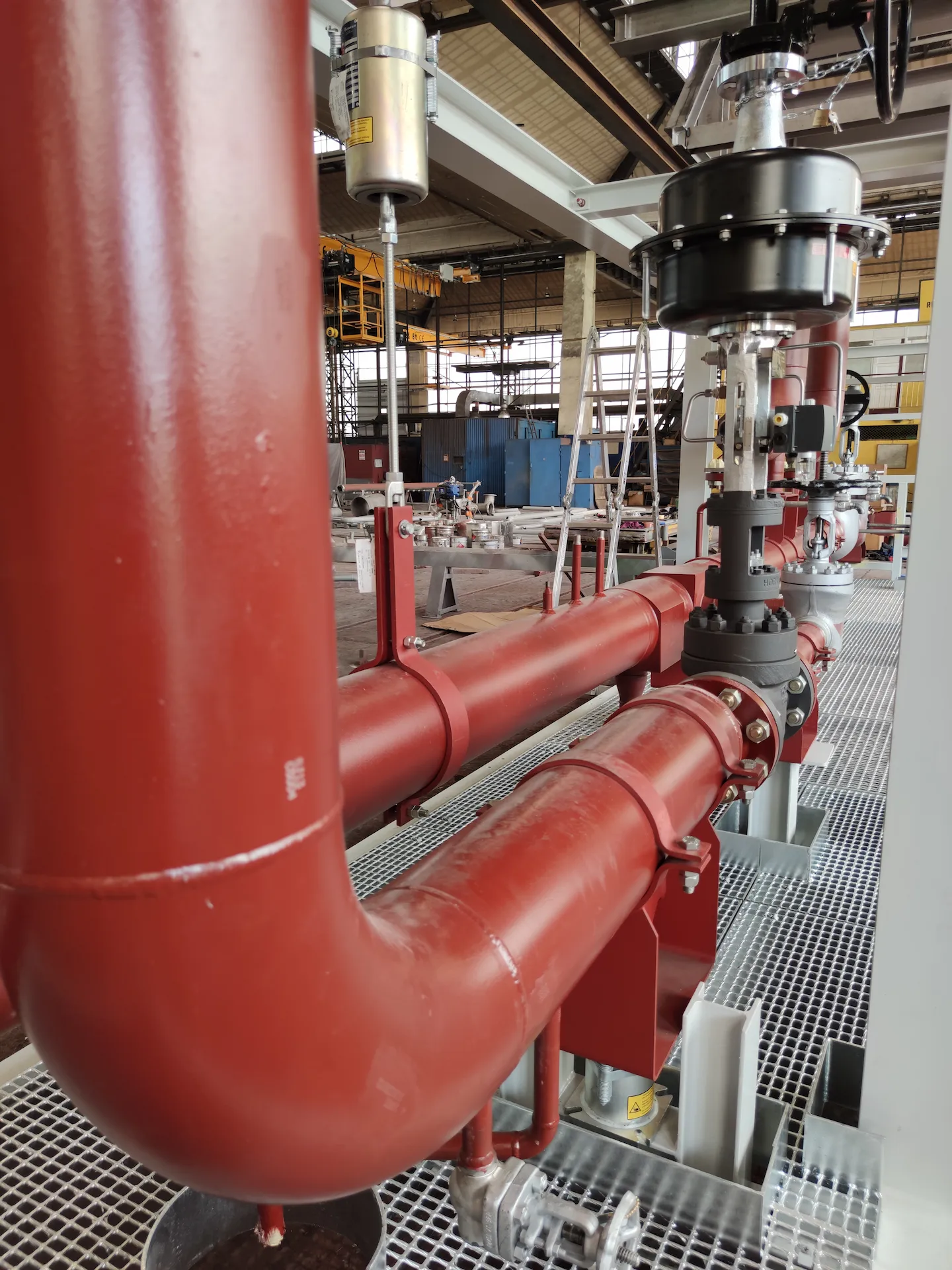
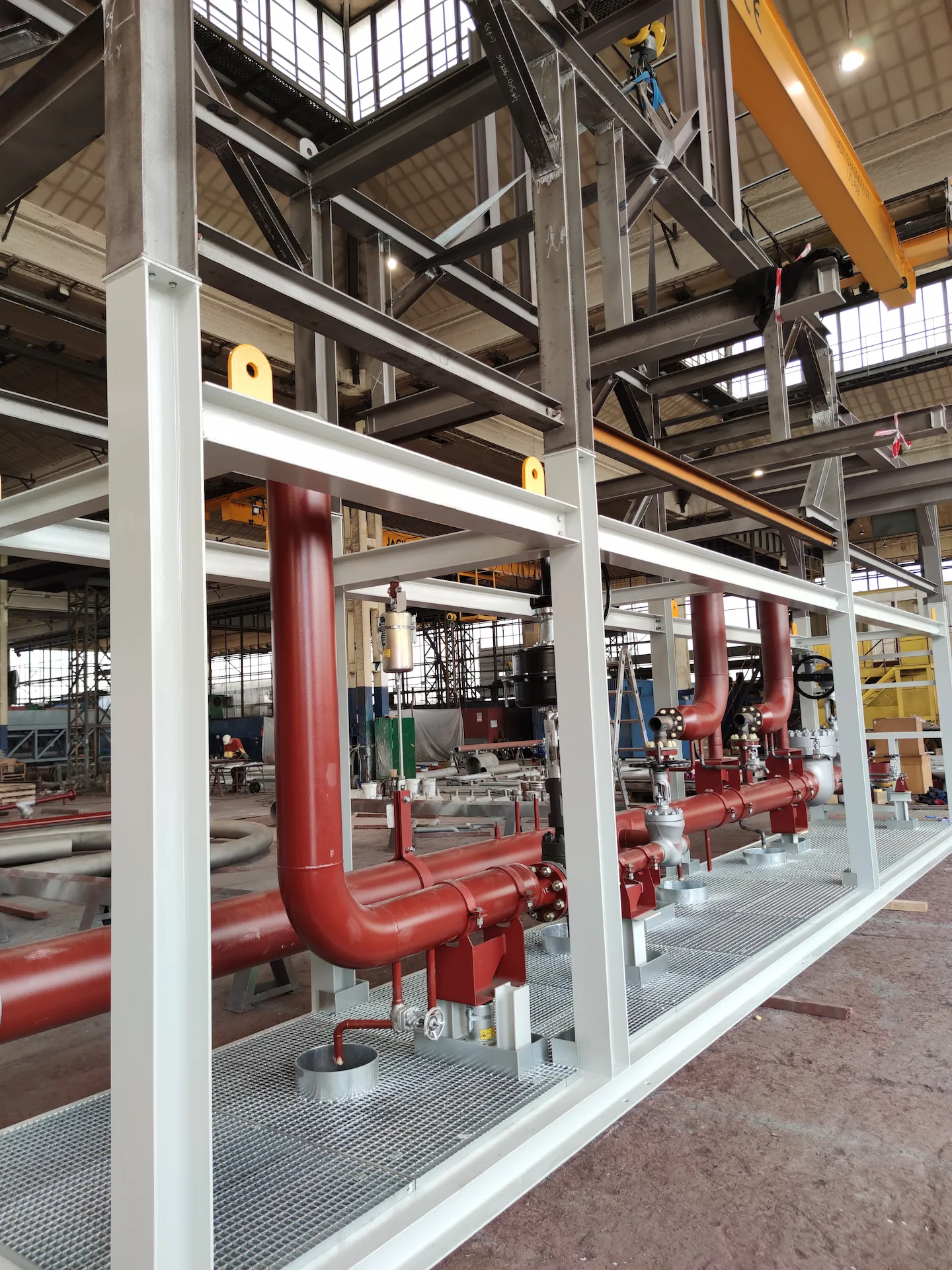
Produced by Chemar Rurociągi Sp. z o.o. pipeline elements (spools) work in Waste incineration plants in various temperature and pressure conditions, from low-temperature cooling circuits (30–80°C) to high-temperature steam circuits (up to 540°C, 80–100 bar). For this reason, materials with high resistance to corrosion, erosion and the action of aggressive gases (HCl, SO₂, NOₓ) are used.
The most commonly used materials by Chemar Pipelines Sp. z o. o.:
| Area of application | Material | Standard / Type | Characteristic |
|---|---|---|---|
| High-pressure steam pipelines | 13CrMo4-5, 10CrMo9-10, P91 | EN 10216-2 / ASTM A335 | Creep and high temperature resistance |
| Feed water and condensate circuits | Carbon steel P235GH, P265GH | EN 10216-2 | Good weldability, resistance to variable pressures |
| Cooling systems | Stainless steel 304L / 316L | EN 10217-7 | Resistance to water and chloride corrosion |
Design and construction of pipelines for Waste Incinerator Municipal (WtE) is carried out in accordance with international standards:
ASME Section I +S / B31.1 / B31.3 – process pipelines
EN 13480 – metal industrial pipelines
PED 2014/68/EU – Pressure Equipment Directive